Human-centred, trauma-informed counselling and workplace wellbeing that supports life and work, in Leamington Spa and across the UK
Working with individuals and organisations, I understand how stress, loss and ongoing pressure shape how we think, feel and respond in life and at work.
Through counselling, hypnotherapy, EMDR, NLP, coaching and workplace wellbeing support, I support lasting change, helping to reduce stress, improve mental health and emotional wellbeing, and create healthier, more sustainable ways of living and working.
Counselling and hypnotherapy are available in person in Leamington Spa and online across the UK.
Workplace wellbeing support is delivered in-person and online nationwide for organisations.
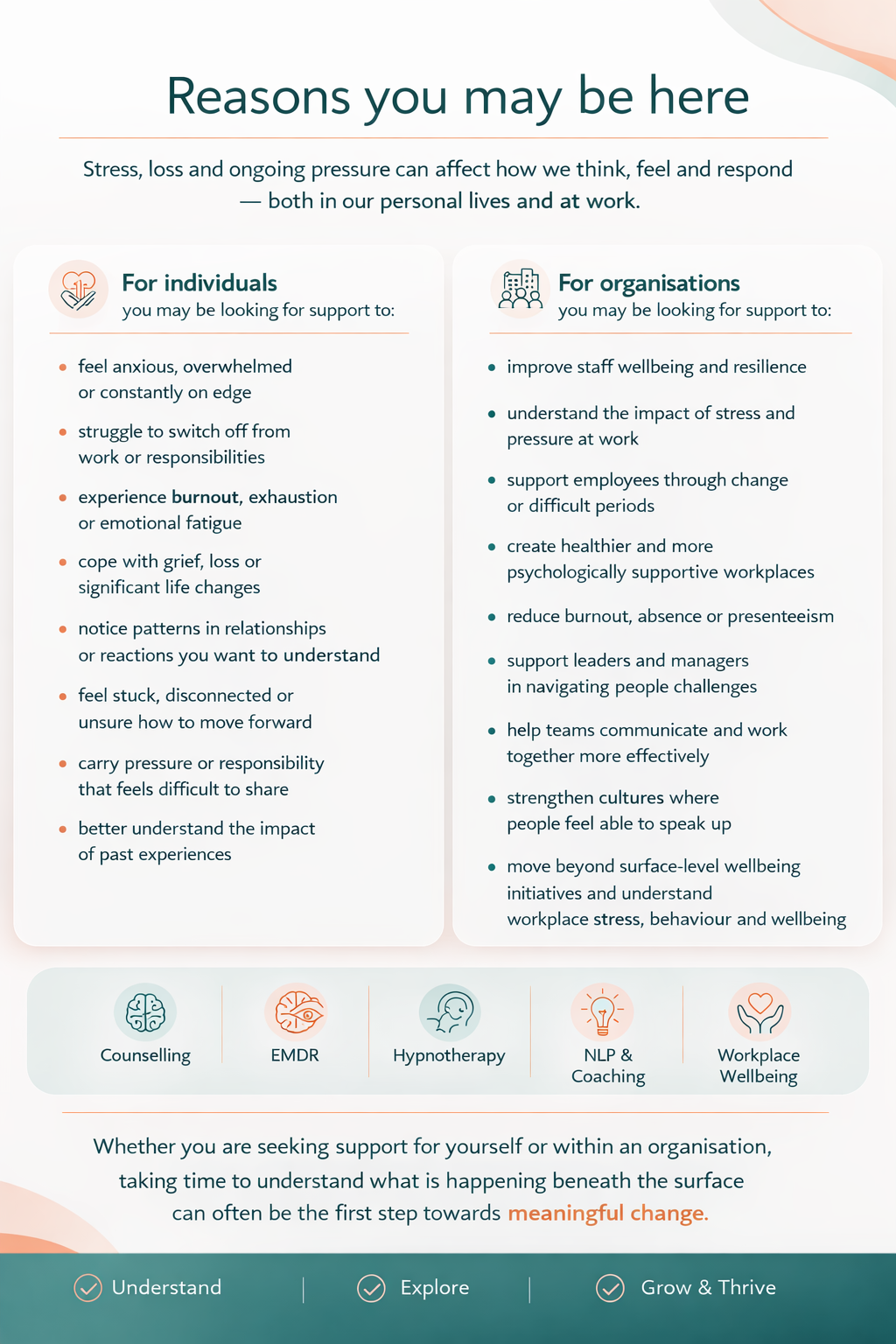
This is the intersection of the human experience: where stress, emotion and physiology shape how we think, feel and respond in life and at work.
Understanding the Nervous System: The Foundation of Wellbeing and Performance
The F.A.S.T. Brain Framework™:
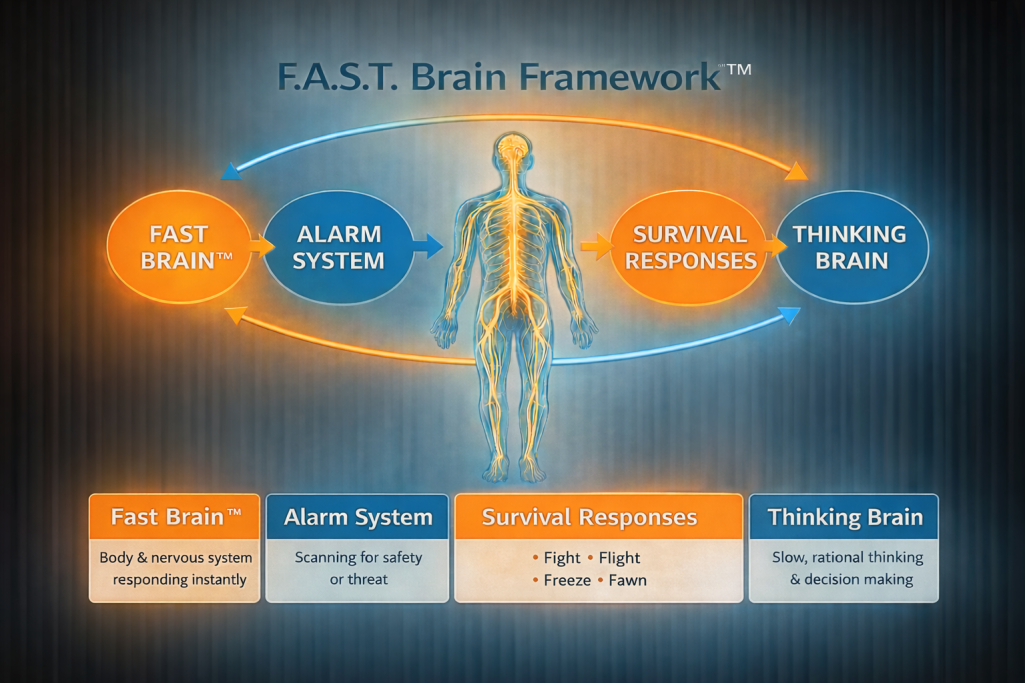
To help explain the nervous system in a clear and practical way, I use a simple model called the F.A.S.T. Brain Framework™.
This framework shows how the fast brain in the body and the thinking brain in the head work together, particularly during times of stress or pressure.
The F.A.S.T. Brain Framework™ describes four key stages of the nervous system response:
F – Fast Brain
The body and nervous system responding instantly to the environment. This happens before conscious thought.
A – Alarm System
The brain continuously scans for safety or threat, activating protective responses when needed.
S – Survival Responses
When the nervous system detects danger, the body may move into responses such as fight, flight, freeze, shutdown or fawn.
T – Thinking Brain (Slow Brain)
When the nervous system feels safe, the thinking brain becomes more active, allowing for clear thinking, emotional regulation, communication and decision-making.
Understanding this process helps individuals, leaders and organisations recognise why people sometimes react automatically under stress and how creating environments of psychological safety and nervous system regulation supports healthier behaviour, wellbeing and performance.
Psychological safety doesn’t start with policies or strategies
it starts in the nervous system.
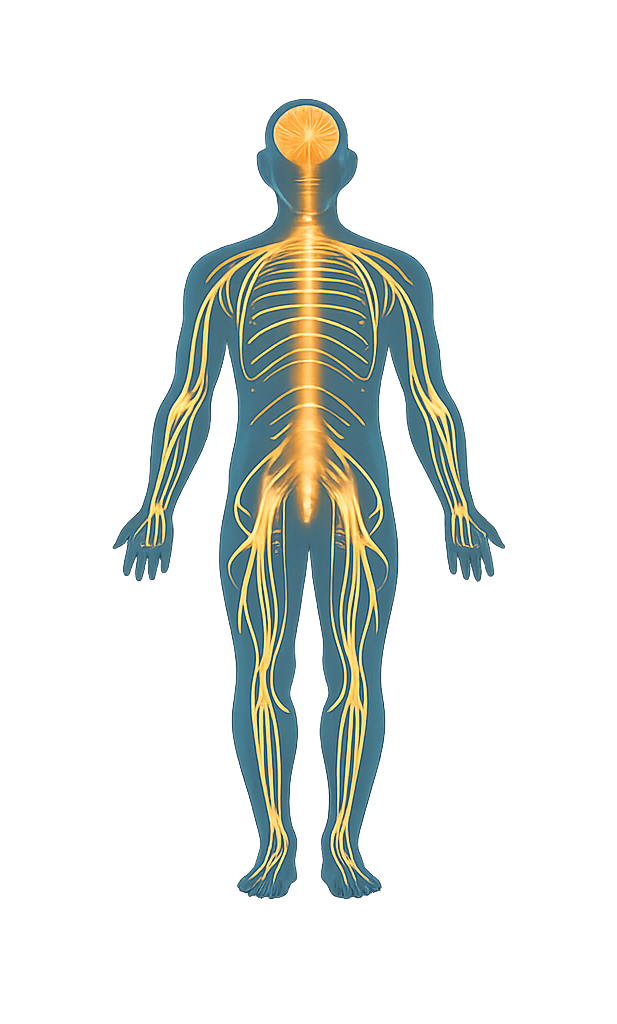
At Sophie’s Well-Being Practice, the nervous system sits at the centre of everything I do with both individuals and organisations.
Many people believe that our behaviour, emotions and decisions are driven primarily by the thinking brain in our head. In reality, much of what we experience begins with the nervous system in the body.
The nervous system acts as the body’s fast brain. Its primary role is simple but essential: to keep us safe and alive.
Every moment of the day, the nervous system is scanning our environment and relationships asking one fundamental question:
“Am I safe?”
When the nervous system detects safety, we are able to think clearly, communicate effectively, connect with others and perform at our best.
However, when the nervous system senses pressure, uncertainty or threat, it activates protective survival responses designed to keep us safe. These responses are automatic and can influence how we think, feel and behave.
When the nervous system remains under prolonged stress, it can contribute to challenges such as:
- anxiety and overthinking
- stress and burnout
- emotional reactivity
- feeling overwhelmed or shut down
- difficulty concentrating or making decisions
- conflict or communication challenges in teams
Understanding the nervous system helps individuals and organisations recognise that many responses to stress are biological, not personal failures.
By learning how the nervous system works, we can begin to develop healthier ways of responding to stress, improving emotional wellbeing, resilience, relationships and workplace performance.
Investing in wellbeing, both organisationally and personally is not the cost of doing business; it’s the fuel that allows people and workplaces to thrive, sustainably and humanely.
When someone feels genuinely cared for, they offer something which can't be bought, trained or demanded: their brightest fullest self.
What if we paused earlier, not because something was wrong, but because wellbeing is the foundation of how people and workplaces truly thrive?
For individuals, small daily choices can create meaningful change. Taking ten minutes to decompress, setting a healthy boundary, having an honest conversation about workload, or noticing strain before it becomes burnout can all make a difference. These gentle practices ripple outward, bringing clearer thinking, stronger communication, more creativity, better relationships, and decisions made from a grounded place rather than exhaustion.
For organisations, the impact is just as real.
Wellbeing is not a perk. It is a performance strategy. When people feel valued and supported, they lead better, collaborate better, innovate more, and stay longer. Well-supported individuals create resilient, high-performing teams, which is the foundation of sustainable organisational success.
But lasting change rarely happens by accident. It begins with intentional support, thoughtful leadership, and a culture that recognises the human side of performance.
Where I come in
Every person, team and organisation is different, which means the support I offer is always tailored to the needs of those I work with.
My work sits at the intersection of individual wellbeing and workplace culture. I support people and organisations in understanding the impact of stress, pressure and life experiences, and in developing healthier, more sustainable ways of responding.
Through counselling, coaching, training and bespoke workplace wellbeing support, I create spaces where people feel safe, valued and understood. In these spaces individuals can reflect, teams can communicate more openly, and organisations can build cultures that support both wellbeing and performance.
When people feel genuinely supported, something shifts.
Clarity returns. Confidence grows. Conversations become more open.
From there, individuals and organisations can move forward in ways that are more human, more connected and more sustainable.

Unlocking the Power of Psychosocial Risk
At Sophie's Well-Being Practice in Leamington Spa, we understand that psychosocial risks can significantly impact individual performance and overall well-being in the workplace.
Our expert team is dedicated to helping businesses navigate these challenges through impactful strategies tailored to your unique organisational needs.
By focusing on high-performance solutions, we equip your team with the tools they need to thrive in a supportive environment. Whether you seek counseling, hypnotherapy, life coaching, or consultancy services, our holistic approach ensures that every aspect of well-being is considered.
Discover how we can help you create a healthier, more productive workplace today.
10%
of adults
Nearly 10% of UK adults took time off work last year due to mental health issues, and almost half were absent for a month or longer.
£51 Billion
Poor mental health costs UK employers an estimated £51 billion per year through absenteeism, presenteeism and reduced productivity.
Summary of what these stats mean:
These statistics paint a powerful picture of the reality facing today’s workplaces.
Nearly 10% of UK adults took time off last year due to mental health challenges, and almost half were away for a month or more, a sign not just of personal struggle, but of systems under strain.
For employers, the impact is substantial: poor mental health now costs UK businesses an estimated £51 billion every year through absenteeism, presenteeism, and reduced productivity.
This isn’t just a UK issue. Globally, only 21% of employees feel engaged at work, meaning the vast majority are disconnected, overwhelmed, or simply getting by rather than thriving.
Together, these figures reveal a simple truth: wellbeing is no longer a “nice to have” it is a critical driver of performance, engagement, and organisational sustainability.
When people don’t feel supported, the human cost is high, and the business cost is even higher. But when individuals feel valued, cared for, and able to bring their whole selves to work, the ripple effect touches every part of an organisation.
When individuals thrive, everything around them changes.